


Do You Need Mobile Security Protection?
A reader asks: 'I am seeing more about viruses and malware on mobile devices. My wife has an iPad and I have an Android smartphone. Should we be concerned enough to look into anti-virus or other security software for these gadgets? Or is it all hype at this point?' Read on for my opinion of mobile security software... |
Anti-Malware Protection for Your Smartphone or Tablet
Malware targeting mobile operating systems is on the rise. Security firm McAfee Labs says its count of mobile malware programs has risen from about 1,200 in 2011 to over 20,000 in 2012. Mobile malware is just as sophisticated as its desktop brethren, too. "Mobile threats already take advantage of exploits, employ botnet functionality, and even use rootkit features for stealth and permanence," according to McAfee's mobile threat report.
Notably, no iPhone or iPad malware has been detected yet. McAfee says, "It is probably a matter of 'when' rather than 'if.'" But the fact that Apple closely vets and controls the apps that make it into the Apple App Store undoubtedly makes it difficult for malware authors to sneak their wares in. But the popularity of Android smartphones and tablets has resulted in a flood of Android malware.
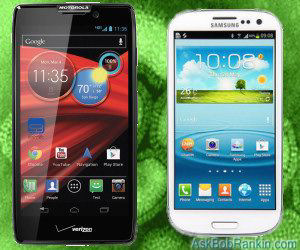
Google Play is the official source for downloading Android apps, and for the most part, these apps are safe. If you have a Kindle, the Amazon app store is another trustworthy source. Both Google and Amazon proactively go after apps that are identified as malware. They can be removed from the market, and even remotely zapped from devices that have them installed.
Who Benefits From Mobile Malware?
Mobile malware aims to make money, of course. One straightforward scheme is malware that secretly subscribes the infected device to premium SMS services; every text message sent or received costs the user money. This type of malware may be concealed in another app such as a calendar or game. Each time you add an appointment or kill a robot, a text message is added to your monthly bill. Other forms of mobile malware may log passwords, steal financial data, and so on.
Some of the mobile malware apps currently circulating are "trojanized" versions of legitimate apps. These apps have been cracked by hackers who add malicious code, then re-release them to app markets. Typically, the original functionality of the app is left intact while the new malicious functionality goes completely unnoticed by users. The intention is to dupe users into thinking they are downloading the legitimate app, when they are actually getting the app plus malware.
As you might expect from the foregoing, there's a booming market for Android anti-malware solutions. All of the major security vendors are rolling out mobile anti-malware apps. Avast!, Kaspersky, Lookout and McAfee are just a few well-known names. As mobile computing grows, so will mobile malware and mobile anti-malware.
But Do You Really Need It?
So do you need mobile anti-malware protection? If you have an iPhone or iPad, I'd say definitely not. One caveat to that would be "jailbroken" iOS devices. If you hack your phone or tablet in order to enable downloading apps from sources outside of Apple's App Store, then all bets are off.
But what about those with Android phones? To the best of my knowledge, there are no mobile threats similar to the "drive-by viruses" that affect desktop users. So if your smartphone activity is centered on talk, text, email or web browsing, I don't see a risk that warrants anti-malware protection. Techniques such as Address Space Layout Randomization (ASLR) and other security features have been implemented in Android 4.0 (Ice Cream Sandwich) and Android 4.1 (Jelly Bean), in order to reduce the possibility of malware attacks.
But what if you're into apps? Well-known apps such as Facebook, Gmail, Yelp, Angry Birds, Kindle, Weather Channel and others with good reputations are safe to use. And I have not heard any reports about malware in any paid apps. Here are some safety tips for anyone using apps on an Android device:
- Don't download from third-party app stores such as GetJar and Handmark, where oversight is lacking or less stringent. If you're outside the USA, be aware that malware abounds in Chinese app markets.
- Before downloading an app, check the permissions that the app is requesting. If an app wants permission to make phone calls; the ability to send, receive or access your SMS messages; or access to your contacts, calendar or camera, those may be red flags, unless it seems obvious that the app would need to do those things.
- Don't download apps that have been on the market less than a month, and only then if they have several thousand downloads and lots of good reviews.
How Effective Are Mobile Security Tools?
The AV-TEST March 2012 mobile security review found the malware detection results of many mobile security software products rather disappointing. Of the 41 Android anti-malware products tested, only 10 detected 90% or more of known malware samples. AV-TEST will be releasing an updated mobile security report in February 2013.
The September 2012 AV-Comparatives mobile security report showed a more encouraging picture. Of the 13 products tested, all achieved a malware detection 93% or better. Some of the top performers include the mobile security offerings from Avast, BitDefender, ESET, F-Secure, Kaspersky, and Trend Micro. The report includes detailed reviews of all products tested, and is definitely worth reading. Of special note are the discussions of features other than malware detection, such as privacy, theft protection, remote wipe, data backup and parental controls. A final bit of good news in the report was that the performance and battery impact of mobile security tools is not significant.
To summarize, the danger zone for mobile users right now is free apps with unknown or sketchy reputations. Stay away from those and you should be safe. But if your child is likely to download almost anything on your mobile device, or you just want the extra peace of mind, try one of the mobile security products in the AV-Comparatives report above. Some of the best are even free.
Your thoughts on mobile security are welcome! Post your comment or question below...


This article was posted by Bob Rankin on 1 Feb 2013
| For Fun: Buy Bob a Snickers. |
 |
Prev Article: SECURITY ALERT: Universal Plug and Play Vulnerability |

The Top Twenty |
Next Article: Free Online Job Search Tools |
 |
Post your Comments, Questions or Suggestions
|
Free Tech Support -- Ask Bob Rankin Subscribe to AskBobRankin Updates: Free Newsletter Copyright © 2005 - Bob Rankin - All Rights Reserved About Us Privacy Policy RSS/XML |
Article information: AskBobRankin -- Do You Need Mobile Security Protection? (Posted: 1 Feb 2013)
Source: https://askbobrankin.com/do_you_need_mobile_security_protection.html
Copyright © 2005 - Bob Rankin - All Rights Reserved
Most recent comments on "Do You Need Mobile Security Protection?"
Posted by:

Harold P. Morgan
01 Feb 2013
I've installed IObit's Advanced Mobile Care app. on my Motorola Atrix HD. I retrieved it from Google Play. Don't know if it is as good as others but IObit seems to usually produce fairly dependable stuff.....it seems to me. What to YOU think?
Posted by:

Santos
01 Feb 2013
I like this article, Bob, you really hit the key points, and I like your tips for keeping safe on mobile devices. It's good that we start taking precautions now, because one day mobile malware will be like computer malware: almost everywhere you look.
Posted by:

Steve
01 Feb 2013
One addional item: If you do download an app, make sure it is from the actual devolper. Recently reported that some apps (like Angry Birds) are posted by a differant devloper,,, guess what can be inside that app?? Yes this is from the store.
Posted by:

MrToo
02 Feb 2013
About two years ago I inadvertently clicked on an advertisement link using my BlackBerry Bold (with no added apps). Several new browser windows opened and I immediately turned off the phone. Later that night all the contacts in my Yahoo address book were spammed. Yes, I was reading my Yahoo mail on my BlackBerry earlier in the day. It is not just the APPs that can get you.
Posted by:

Andrea
02 Feb 2013
I personally do use antivirus on all of my PCs, tablets, and my phone. I use LookOut since it's very highly rated. They have a free version, but I upgraded to the paid version for $30/year for maximum protection, plus it provides extra features. I can use it on all my devices....Galaxy Nexus phone, iPad, Nexus 7, and Toshiba Thrive tablet. You can log into your account on any computer through a browser. I has a find my device feature in case it gets lost or stolen. It received a new update recently where you can allow it to silenty take a picture using the front facing camera if someone enters the wrong password 3 times....so if someone steals your phone, you can take a pic of them and they wouldn't know it. The phone would then email you the picture and the location of the device, and of course, you can access your email somewhere other than from the phone. You can also add a note to the device's lockscreen...for example, you can add a note saying something like, This phone is lost, if you find it, please call....or email....or whatever note you want it to say. It also scans any apps you download, it scans websites you visit....on and on.
It's a great app with many features and they keep adding more. Personally, it is worth it to me to pay $30/year for all these features. There are way too many viruses around, fake apps, scams, etc, so I just don't take the chance.
Posted by:

MmeMoxie
06 Feb 2013
Because of than article, that you wrote awhile back, I got Anti-Virus, Anti-Malware protection. I have an Android Smartphone and know that it has lots of security issues. Google barely, updates their phone OS and doesn't seem to be that concerned about any security. So, I looked around, checked things out with several reveiws and testing. I found NetQin and simply LOVE it. It only costs me $6.99 for 6 months, for the Pro Version. It covers all of it and does protect my phone.
NetQin comes from China. Since, a lot of the Malware, Viruses, Trojan Horses, and Worms are coming out of China and the Far East, why not have a protection program, that will get the lastest issue, sooner than the USA?! Their prices are extremely reasonable, they even have a free version, and I know that my protection program is working, every time I download or update an app, NetQin is there, checking it out.
I recommend that ALL Android Smartphone users, use some kind of Anti-Virus/Malware protection. As I said earlier, Google doesn't seem to really care about security, since they rarely do updates for their OS. Also, it is always better to be safe, than sorry, right? }:O)
Posted by:

Ted Morrow
25 Feb 2013
Great article. I have recently bought my Android phone and was just thinking about which Anti-Virus should be used on my phone. By the way I am developing for Android (it will be an app similar to the following one: http://www.voip-sip-sdk.com/p_456-voip-android-integration-voip.html). I think Avast might be a good decision.
EDITOR'S NOTE: Even though that was a sneaky, off-topic way to plug your website, I'm going to let it slide. :-) Greetings to you and your fellows in Hungary.
Posted by:

MmeMoxie
25 Feb 2013
Update ... I was using NetQin Mobile Security, as protection for my Smartphone. I also, was paying $6.99 for 6 months of the Pro version of NetQin.
Right after this article, I noticed that it was time to renew my NetQin Pro. Well, I was shocked, when I saw that the price for the Pro version, is now $7.99 for 3 months, $12.99 for 6 months and $19.99 for 1 year. For me, that is too much to pay. Please, I am on a fixed income and $6.99 for 6 months was very reasonable.
So now, I am using avast! Mobile, the free version and it is doing everything that NQ Mobile Pro was doing ... And, it FREE!!! I have been a user of avast! for my PC, for years now and have been pleased with the protection I get from the FREE version of avast! Home version.
Please, NQ Mobile Pro is easy to use and protects excellently ... The only reason I changed, was due to the price increase. Many people can easily afford $19.99 a year, I just can't.
Posted by:

Lou
15 May 2013
Bob, How do I print or save your most recent comments on, Do I need moble security protection page. Thank you...
EDITOR'S NOTE: The style sheet I use for printing does not include the comments. You can copy & paste them into a text editor or word processor, and print from there.