


Linux Help
I've heard a lot of buzz about Linux as a free alternative to Windows, but have hesitated because it seems a little geeky. Can you recommend an easy way to get started with Linux? |
Linux for Beginners
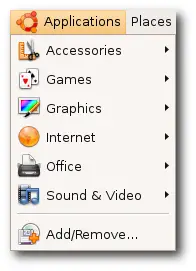
If you are a Windows user looking for a Linux environment that's not a radical change from what you're used to, try Ubuntu. Ubuntu bills itself as "Linux for Human Beings" and strives to do away with the widely held notions that Linux is just for geeks, or not ready for prime time. Ubuntu (pronounced oo-boon-too) is a complete Linux-based operating system, available free of charge, and focused on usability, regular releases, and ease of installation. The name is an African word meaning "humanity to others".
Although Ubuntu includes more than 16,000 pieces of software, it still fits on a single CD. In addition to the Linux operating system and graphical interface, you'll find desktop applications such as the Firefox web browser, OpenOffice for word processing and spreadsheet, graphics applications, games and programming tools. Ubuntu provides an easy-to-use graphical installer CD, and should take less than 25 minutes to set up on a typical computer.
There are several other popular Linux variants, including RedHat, SuSE and Debian. If you'd like to explore all the options, here's a site with information about where to buy or download Linux: http://www.linux.com/directory
More Linux Resources
If you're a gamer, and unwilling to leave a Windows environment because there is no Linux version of your favorite games, try Cedega, which allows Windows games to run on Linux seamlessly. With Cedega installed on your Linux computer, you can pop in your game CDROM, then install and play the game just as you would on a Windows system.
Taking it one step further, you can use the VMware Player to run Windows (in a window) right on your Linux desktop. It's pretty cool to see Windows running on the same screen as Linux, and you can even cut & paste, or copy files from one environment to another.
For more information on Linux history and commands, see the LowFatLinux tutorial.
Got comments on Linux? Post your thoughts below...
|
|
|


This article was posted by Bob Rankin on 7 Sep 2006
| For Fun: Buy Bob a Snickers. |
 |
Prev Article: Spam Blocker |

The Top Twenty |
Next Article: Spyware or Virus? |
 |
Post your Comments, Questions or Suggestions
|
Free Tech Support -- Ask Bob Rankin Subscribe to AskBobRankin Updates: Free Newsletter Copyright © 2005 - Bob Rankin - All Rights Reserved About Us Privacy Policy RSS/XML |
Article information: AskBobRankin -- Linux Help (Posted: 7 Sep 2006)
Source: https://askbobrankin.com/linux_help.html
Copyright © 2005 - Bob Rankin - All Rights Reserved
Most recent comments on "Linux Help"
Posted by:

David
07 Sep 2006
From a useability and hardware support standpoint, Linux has come a long way in the last couple of years. For those of you out there who think you've never tried Linux - think again. A large percentage of web sites and web based applications are run on Linux, so you've visited it often. ;-)
If you are not certain and want to just try it out, some OS's like Ubuntu will even run from the CD - no install required. Of course its slower that way, but gives you a chance to try.
And there's other install options that mean you don't have to replace Windows, just add something new, like a program.
Posted by:

Rayh
07 Sep 2006
Nice job, Bob. I've been a subscriber and a linux user for a long time. The Ubuntu software update system is a treat. Even with my dialup I get notification as soon as any updates are released. We are able to use the same release system for our own motion control software. This feature puts the user in charge of their computer.
Glad to see you making public statements and a bit of support toward Linux. Let me know if I can help at all.
Posted by:

M E (Gil) Gilmore
07 Sep 2006
When I started playing with Linux I was very impressed, except for two problems: (1.)When I try to print all I get is a line of gibberish on each of a bunch of pages (HP Deskjet 5150). HP only offers drivers for Windows. (2) Can different distros of Linux be mixed? e.g. if I have SuSE installed can I also install Ubunto?
EDITOR'S NOTE: I would search Google for something like "linux driver for deskjet" first, then look for a forum specific to that Linux distro for more help from other savvy users. And YES, you can install multiple Linux flavors. But you will need a separate partition for each install.
Posted by:

Robert
07 Sep 2006
RedHat wants you to pay for their official "RedHat" releases now. Their free OS is named Fedore Core and is prettymuch the same thing. http://fedora.redhat.com/ They're up to Core 5 now. I tried Core 4 about a year ago and the interface is very nice looking and easy to use. It comes on 5 CDs though so it's not quite as compact as Ubuntu.
Posted by:

Chuck Pilger
07 Sep 2006
Ubuntu/Kubuntu gets a lot of press as an easy to use, attractive and very professional Linux distribution. While this is true, the latest release (Dapper Drake) has been plagued by a few bugs that could be showstoppers for an absolute beginner. Most of these bugs were easily fixed by people with a modicum of Linux experience and were rapidly addressed by the Ubuntu folks, typically within hours of being reported. However for a neophyte, running into one on your first installation could be very discouraging. I would suggest that anyone who has trouble with Ubuntu/Kubuntu, not become discouraged and give up on Linux. Simply try another distro and you may find it works perfectly with your hardware.
I usually recommend that people try a minimum of 3 or 4 distros before settling on a "final" choice. This is easy to do since many of the best distros are available as live-cds that can be tried without installation to the harddrive.
My favourite distros for ease of installation and use are PCLinuxOS, Simply Mepis, Kanotix and Kubuntu, approximately in that order; however since most distros are a breeze to setup, there is lots of choice out there and your "best" distro may be something else entirely. I urge anyone who hasn't tried Linux to investigate it. Linux really does put the fun back into computing.
Posted by:

catweasel
09 Sep 2006
I definitely prefer KDE to GNOME and have used the Mandrake/driva distros for some time, although I enjoy trying out other distros. I haven't used the latest Kubuntu, but their 'Breezy Badger' had lots of interesting applications.
As well as the four mentioned by Chuck above, other distros which shouldn't daunt those migrating from Windows for the first time are: Linspire, Xandros, Alinux
Posted by:

Ken
20 Sep 2006
Having tried Ubuntu and 4 other linux releases, I have given up, I cant find any that can cope with 108m Wireless networking, any idea's please?
EDITOR'S NOTE: I assume you're talking about an 802.11g router and adapter. Since the typical operating range of 802.11g is 54Mb/s, you may be out of luck trying to find an adapter with Linux drivers that pushes the envelope to 108 Mb/s.
Posted by:

PokBeng Lim
31 Jan 2007
Dear Dr Bob, I have been trying to use Linux without success.Up to now it is still lying in the PC idling. The worst obstacle is that I could not configure the modem whether it is a 56K dialup or an ADSL router. The Linux driver provided with the 56K would not work and the ISP for the ADSL does not have support for Linux and the ALCATEL Speed Touch 510 ADSL Router does not provide any Linux driver. It seems that no Linux modems are on sale. I envy those who really can surf the internet with Linux.
EDITOR'S NOTE: In my experience, if you have a linux machine connected to a standard router with a standard ethernet/network cable, it just works... no extra software or drivers needed. Modems can be trickier, but I've used several common brands on Linux machines and in each case they were automatically recognized and worked without any special magic.
Posted by:

Mike
01 Feb 2007
A LiveCD is a fully working, bootable copy of Linux on CD. Especially for people who are "kicking the tires", a LiveCD is a great way to try it out without having to rework your hard drive.
Make sure your BIOS is set to boot first from CD, fire up the PC and away you go! You will come up to a Windows-like interface, ready to play with. If you have broadband, your network card will likely be detected and you're ready to surf the 'net!
EDITOR'S NOTE: Yes, a Live CD is a great way to try out the Linux environment. Ubuntu, PCLinuxOS and Knoppix offer Live CD versions, which you can find via the link I gave in the article.
Posted by:

Ram
05 Feb 2007
I installed ubuntu (Hoary Hedgehog) on my father-in-law's PC early last year after he got frustrated with perpetually slowing down MS Windows. As a novice PC user, he did not know how to cleanup all the mess left behind by Adware, Spyware, Viruses etc,. Despite his age (70 years old) he has adapted very well with "ubuntu" and finds ubuntu very stable, fast and always available. He's more than happy now!
Posted by:

bill
25 Apr 2007
Hello bob, I am asking if you can help me i need a wireless ethernet router for my linux pc and a compatable wireless usb stick for my laptop. Both systems are running ubuntu feisty fawn. And i would love them both to share my broadband connection. I'm asking because i have purchased a wireless ethernet router that seems not to be compitable with linux.
EDITOR'S NOTE: It's more likely the wireless adapter that's at fault. Can you get the internet connection if you plug your Ubuntu system directly into the router with a network cable?
Posted by:

MP
01 Jun 2007
When working In Linux [root@localhost root]# changed to >. How can I go back to [root@localhost root]# prompt?
Need help please.
EDITOR'S NOTE: Something like this should work: PS1="\[\w \u \]\# "
See http://lowfatlinux.com/linux-command-prompt.html for more info.
Posted by:

Ronald Houts
31 Jul 2007
I am looking for a Power Point presentation for introducing Ubuntu Linux to our Senior Computer users at the Round Rock TX Senior Center. I have used your Computer care 101 and 102 to very good response. I always give you credit for the PP show, and that brings up your web site and "Tourbus" and we discuss your site and a little bit about you.
EDITOR'S NOTE: I would just boot up Ubuntu, and show them how similar it is to what they use now. Most people do word processing, email and web surfing. All of them are a click away in Ubuntu.
Posted by:

Fred Belfitt
05 Jun 2008
Hello from Cyprus. I've been trying to use the "LowfatLinux" website. The general reading follows reasonably well.
I can move to previous and next lessons OK.
However, the most important link that doesn't work is "RETURN TO INDEX"
Being new to Linux means that I cannot usefully read your pages in a continuous manner. Can you help?
EDITOR'S NOTE: The "RETURN TO INDEX" link doesn't change the page, it just relocates the left-hand nav bar, so you can pick another topic in the same category.
Posted by:

John
26 Aug 2011
I'm a longtime Windows user wanting to make the switch to Ubuntu 10.04 LTS, 10.10 or the new 11.04 (64-bit versions). I'm considering buying a new PC at the time I do this but don't know how much processing power I'll need. Other than typical email and web browsing, I mainly do photo editing. Suggestions?
EDITOR'S NOTE: Generally, you'll need a lot LESS if you move from Windows to Linux. Any off-the-shelf machine with 4MB of RAM should do very well for you.